Gasoline in Thailand is not cheap, and there's a simple explanation: the country has no oil. However, renting a car still makes sense. Paying for taxis will cost even more, and traveling by public transport is time-consuming and uncomfortable.
Fuel Costs
↵
↵
Prices in 2026, with slight variations between different stations:
- Gasoline 91 – 35-38 THB (~$1.15)
- Gasoline 95 – 36-40 THB (~$1.30)
- Diesel – 30-33 THB (~$1)
- E20 – 33-35 THB (~$1.05)
What to Fill Your Rental Car With
Since Thailand has no domestic oil and imported fuel creates heavy dependence on exports, Thais have found alternative solutions. One approach: ethanol fuel mixtures, commonly known as gasohol.
Gasohol is a blend of regular gasoline and ethyl alcohol derived from plant crops, most often palm oil. Three types of gasohol are widely available:
- Gasohol 95 – 95-octane gasoline with 10% alcohol
- Gasohol 91 – 91-octane gasoline with 10% alcohol
- Gasohol E20 – 91-octane gasoline with 20% alcohol
Gasohol E85 (85% alcohol) exists but is extremely rare.
When renting a car, confirm with the rental company which fuel type is suitable for your car.
↵
If you prefer to check yourself, here's a detailed guide:
Vehicles manufactured in Thailand have labels on the fuel cap indicating compatible fuel types. For other vehicles, this information appears either on a sticker in the driver's door frame or around the fuel filler neck.
Understanding the labels is straightforward:
- Red color with "gasolin" – requires pure gasoline only (unavailable in Thailand since 2013 ban)
- Green color, number 91 – E10 compatible
- Orange, 95 – E10 compatible
- Blue color – E20 compatible
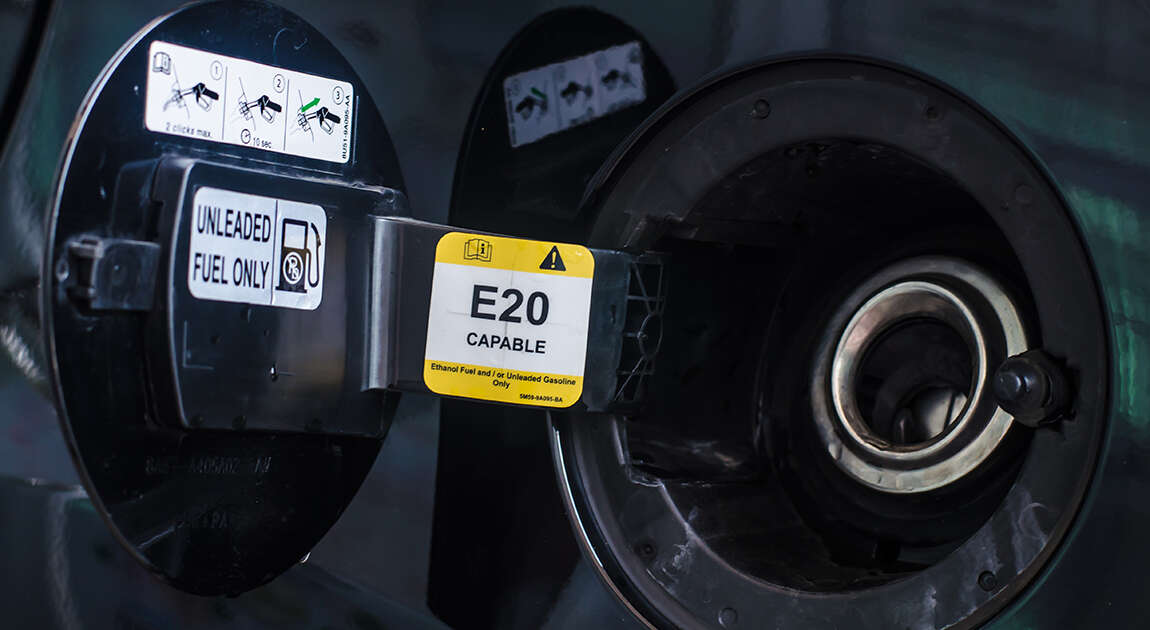
Any vehicle manufactured in Thailand within the past 10-15 years can safely use E10. If you've rented a car produced before 2007, consult with the rental company. Most have been converted to E10 compatibility, though exceptions may exist.
Vehicles compatible with E20 and E85 are much less common, as are stations offering these fuel types.
Diesel is available at virtually any gas station.
Gas (LPG/NGV) stations are fairly common throughout Thailand. Gas is the cheapest fuel option at 15-20 baht (~$0.55). LPG stations predominate because the equipment is less expensive and simpler to maintain. NGV stations exist but are considerably less common.
Should You Buy Gasoline in Bottles?
Bottled gasoline is a distinctly Thai phenomenon you'll definitely encounter. It's sold on streets and sometimes in small shops.
Bottles are typically glass without identifying marks. Occasionally you'll see "GASOLIN" written on them, but not always. Volume isn't indicated. Note that this is actually gasohol (gasoline with ethanol), not pure gasoline.
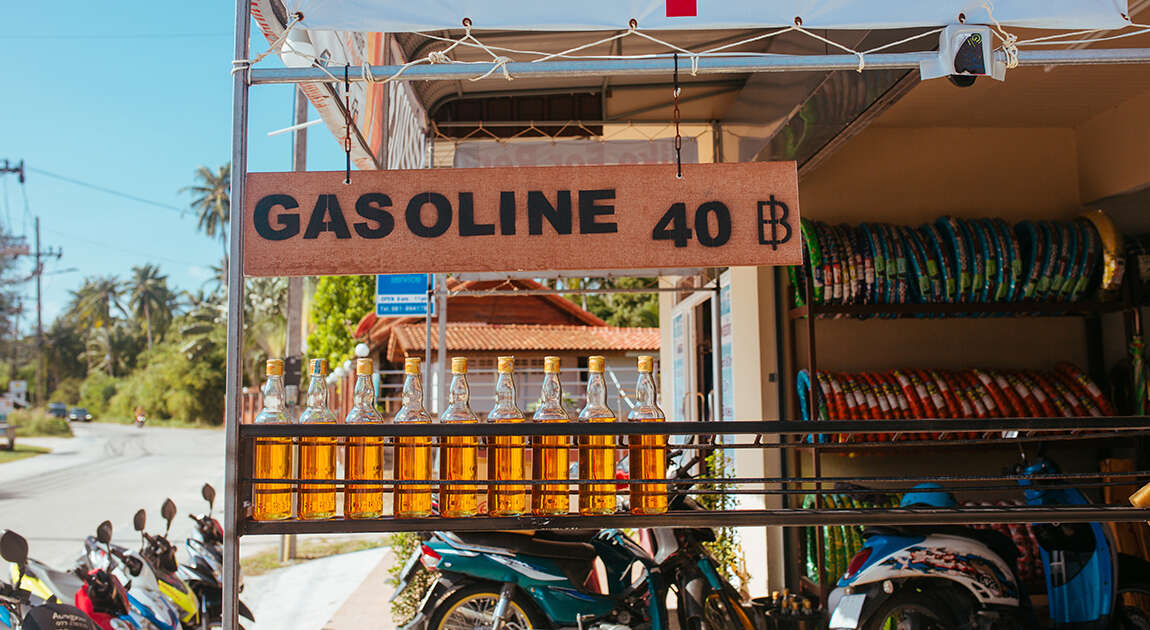
Buying bottled gasoline is not cost-effective. Station fuel is cheaper per liter and better quality. However, if you "run out unexpectedly," this option can help in a pinch.
Gas Stations in Thailand
Stations are common, most operate 24 hours, and service quality reflects typical Thai hospitality – calm and friendly.
Typically, pumps for cars and motorcycles are separate. This relates to certain local fuel types being less suitable for motorcycle engines. Check which vehicles are in the queue.
On neighborhood roads, you'll find automatic dispensers with gasoline specifically for motorcycles, though it's generally more expensive. Thais typically fill their personal motorcycles with E10.
The refueling and payment procedure is simple: tell the attendant how many liters you want and pay. Cash without needing change works best, as exact change is customary in Thailand, and you'll otherwise wait for precise change counting.
Larger stations accept card payments. The process: refuel, indicate you want to pay by card (showing the card is sufficient), move your vehicle, then walk to the manager's counter to complete payment.
Tipping the attendant 10 baht (~$0.29) is optional.
Station Amenities
Free restrooms are standard, often with a small shop. At major chain stations (Caltex, PTT, Shell), you'll find decent restaurants, and some even have full guesthouses.
Music is common at Thai gas stations, and in the evening, workers might even dance – it's completely normal here.
Using Automatic Pumps
Select fuel type on screen, choose quantity, insert money (exact amount) – refueling begins automatically.
As mentioned, Thailand has plenty of gas stations along every highway. However, if you're heading to Bangkok, for example, you'll need to exit the highway to refuel, and exits are limited. Monitor your fuel gauge, and if running low, refuel at the next available exit.
In Pattaya, gas stations are less numerous and located primarily along Sukhumvit Road.